

A Practical Guide to Outdoor TVs for New Jersey Backyards
Updated: Apr 13

Outdoor spaces have changed over the last few years, and they are no longer just patios with a grill and a few chairs. For many homeowners, the backyard has become part of everyday living, a place to relax, host, and spend real time with family and friends.
Adding an outdoor TV seems simple at first, mount a screen, plug it in, and enjoy. In reality, it rarely works that way. Glare washes out the image during the day, sound feels uneven across the space, and streaming becomes unreliable. What should feel easy starts to feel frustrating.
That disconnect happens because an outdoor setup is not just about placing a television outside, it is about building a system that works in a completely different environment. In New Jersey, that includes bright sun, humidity, and seasonal temperature swings, along with layouts that were never designed for screens. Placement, brightness, power, and connectivity all shape how the experience turns out.
This guide walks through what works, what to avoid, and how to approach an outdoor TV installation so it feels natural, reliable, and easy to use every day.
WHAT MAKES OUTDOOR TVs DIFFERENT
A common assumption is that a regular indoor TV will work outside, especially under a covered area. At first it may seem fine, the picture looks clear and everything turns on. Over time, problems begin to show.
Outdoor conditions introduce variables indoor spaces do not have. Humidity builds even under a roof, temperatures shift from hot summers to freezing winters, and exposure to dust and moisture affects performance. Indoor screens are not designed for this, so brightness fades, components wear down, and reliability becomes inconsistent.
Weather-rated displays are built for these conditions. They are sealed against moisture, designed to handle temperature changes, and engineered for visibility in natural light. That last point matters more than most expect, because a screen that looks great indoors can become difficult to see outside during the day.
A well-planned system accounts for these factors from the start, so the experience feels consistent every time you turn it on.

SUN EXPOSURE
Before choosing a screen, the most important factor is how much sunlight your space receives throughout the day. This is where most outdoor TV setups succeed or fail.
Light directly affects visibility and long-term satisfaction. A display that works well in one environment can struggle in another, which is why every installation should begin with understanding how sunlight moves across the space.
You can start by observing the area at different times of day to determine whether it falls into full shade, partial sun, or full sun.
Full Shade
Covered patios and enclosed porches typically fall into this category because these areas receive little to no direct sunlight. In full‑shade environments, lower‑brightness screens perform well, glare is minimal, and the image remains clear throughout the day. This is the most forgiving and easiest setup to get right.
Partial Shade
Spaces with shifting sunlight throughout the day require displays that can adapt to changing conditions. Brightness and anti-glare performance become more important so the image remains clear without constant adjustment.
Full Sun
Direct sunlight creates the most demanding conditions. High-brightness displays designed specifically for daylight viewing are required, along with careful placement that accounts for viewing angles and seasonal sun movement.
Understanding these three conditions early simplifies the entire process. It prevents costly mistakes and ensures the system works the way you expect, consistently, clearly, and without frustration.

SOUND BALANCED ACROSS YOUR SPACE
A screen alone does not create the experience, because outdoor audio systems behave differently than indoor setups. Without walls to contain sound, audio can feel uneven or disappear as you move through the space, which is why proper speaker placement matters.
A well-designed outdoor audio system distributes sound so it feels consistent whether you are near the TV, by the grill, or across the patio. For smaller areas, a weather-rated soundbar may be enough, while larger layouts benefit from landscape audio systems like Coastal Source, along with discreet subwoofers that blend into the environment.
CONTROL SYSTEMS THAT SIMPLIFY EVERYTHING
Outdoor entertainment should feel easy to use, not something you have to think about every time you turn it on. Smart home control systems bring everything together so your outdoor TV, audio, and lighting work as one.
Platforms like Control4 and Crestron allow you to manage your outdoor TV system, audio zones, and streaming devices from a single interface, whether that is a remote, phone, or wall keypad. Instead of switching inputs or adjusting multiple devices, everything works together in a way that feels simple and predictable.
OUTDOOR WIFI & STREAMING
Streaming live sports, movies, and music outdoors depends on a strong and stable connection, yet backyard WiFi is often the weakest part of the home network. Walls, glass, and distance reduce signal strength, which leads to buffering and dropped connections.
A properly designed outdoor WiFi system uses strategically placed, weather-rated access points to extend coverage across your yard. When your outdoor network is built correctly, streaming feels just as fast and reliable outside as it does inside, without interruptions.
When sound and connectivity are planned together, the technology fades into the background and the experience becomes the focus.
COMMON MISTAKES
Most problems with outdoor TV setups come from early decisions that do not account for the environment.
Here are the problems homeowners run into most often:
Using an Indoor Screen Outside
A regular TV may seem fine at first, especially in a covered area, but moisture, temperature swings, and limited brightness gradually take a toll. The result is a screen that doesn’t hold up or stay visible when you actually want to use it.
Underestimating Sunlight
A display that looks sharp indoors can become hard to see once direct or reflected light hits it. Without matching the system and placement to the way the sun moves across the space, visibility becomes inconsistent throughout the day.
Treating Audio as an Afterthought
Portable speakers and quick fixes rarely provide even coverage. They’re only loud enough in the immediate area, run out of battery, and often lose connection, creating a poor experience even if the image looks good.
Ignoring the Network Outside
Outdoor areas are often left out when the home’s network is planned. That leads to buffering, dropped streams, and slow load times right where people expect a simple, relaxing experience.
Each of these issues may seem small on its own, but together they create frustration and extra cost down the line. Addressing them early leads to a system that works the way it should every time you turn it on.

THE INVESTMENT: WHAT TO EXPECT
When planning an outdoor space, a common question is: “What is the actual investment required to do this right?” While every project is unique, most professionally installed systems in the New Jersey market fall into three broad categories based on the scale of the technology and the complexity of the integration.
These are typical ranges, not fixed packages. Actual costs vary with the yard, wiring, mounting conditions, and the equipment you choose.
Entry-Level: The Focused Space
Best for: Covered patios, screened-in porches, and full-shade environments.
Weather-Rated Display: Specialized for shade (lower "Nits" of brightness).
Audio: High-performance weather-rated soundbar.
Typical Investment: $2,500 – $5,000.
At this level, you are replacing the "indoor TV" risk with a purpose-built outdoor screen that can survive the humidity and cold without needing specialized high-bright panels.
Mid-Range: The Versatile Entertainment Zone
Best for: Pergolas, deck areas with shifting light, and poolside seating.
Partial-Sun Display: High-output panels designed to cut through glare.
Audio: Multi-point landscape audio (4 speakers + 1 subwoofer) for even coverage.
Connectivity: Dedicated outdoor Wi-Fi access point for lag-free 4K streaming.
Typical Investment: $6,000 – $12,000.
This tier focuses on "The Unified Sound Field," ensuring your audio is clear even over the sound of a pool pump or wind.
Premium: The All-Season Luxury Estate
Best for: Full-sun exposure, large-scale outdoor kitchens, and integrated smart homes.
Full-Sun Display: Ultra-high-brightness technology (2,000+ Nits) for crystal-clear viewing at noon.
Audio: Full-perimeter architectural landscape audio with zoned volume control.
Integration: Full control via your existing home automation system (Crestron, Control4, etc.).
Typical Investment: $15,000 – $30,000+.
These systems are engineered for total environmental endurance. They aren't just "add-ons"; they are permanent architectural features of the home that perform consistently in July or January.

HOW HOMEOWNERS ARE USING THESE SPACES
Across the Northeast, patios, decks, and gathering areas are being used differently than they were just a few years ago. Instead of being purely seasonal, they’ve become places to party, unwind, and spend everyday time not just for special occasions.
Common patterns include:
Game Day Outside
Instead of moving between rooms, everything stays in one place. Friends gather, food stays outside, and the game becomes part of the environment rather than something you step away indoors to watch.
Movie Nights That Feel Different
A comfortable seating area, balanced sound, and a clear picture under the evening sky can turn an ordinary night into something people remember.
Everyday Use, Not Just Events
Many people are surprised by how often they use these systems: morning news with coffee, background music during the day, a quiet show in the evening without going back inside. When everything is done right, the space doesn’t feel like an upgrade; it feels like a natural extension of the home.
DESIGNING THE SPACE
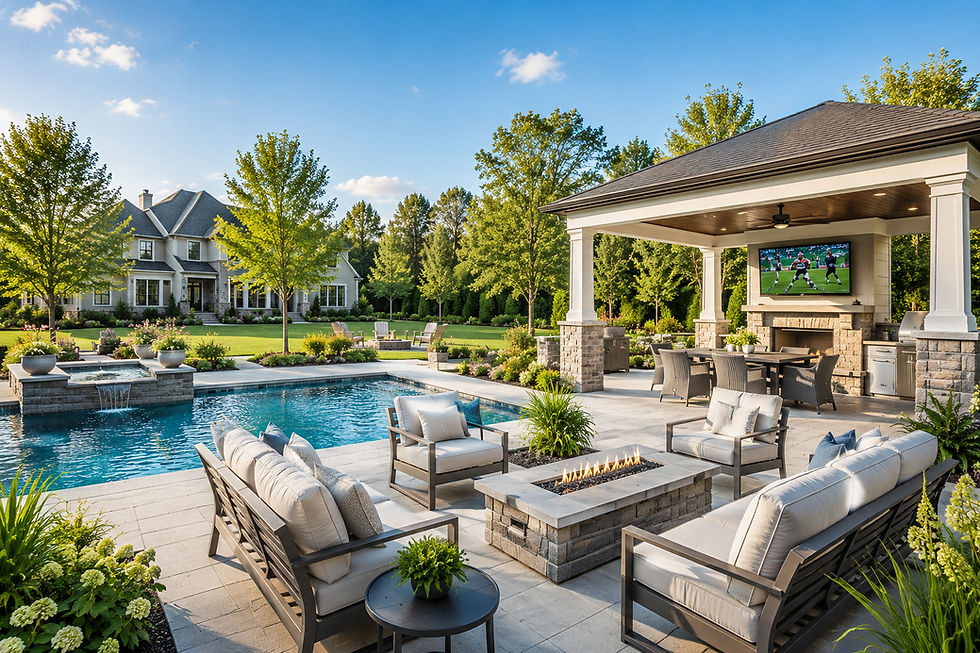
The goal is to do more than “add a TV.” The best outdoor setups feel like part of the space, not something bolted to a wall at the last minute.
Seeing the Screen from Where You Actually Spend Time
Backyards don’t have fixed rows of seats like a theater. People move between the grill, the table, the fire pit, and the pool. A good layout makes the screen easy to see from the main places people gather without forcing anyone to twist, squint, or drag chairs around.
Function First, Then Symmetry
Indoors, it’s common to center everything on a wall. Outside, the sun, the view, and how people walk through the space matter more than a perfect center line. A screen placed just for looks can end up in full glare or blocking a natural path. It often works better to align the TV with the primary seating and tie it into lighting and audio so the whole zone feels connected and comfortable.
Designing for Movement, Not Just Chairs
In a real backyard, people stand, sit, lean, and move around. Some will be at bar height, some in lounge chairs, some walking by. Planning for those different sightlines helps the system feel good whether you are hosting a big group or just relaxing at the end of the day. When the layout matches how the yard is actually used, the technology stops drawing attention to itself and the space feels like it was designed that way from the beginning.

TRUSTED OPTIONS
There are a few brands that consistently perform well in outdoor environments.
The Samsung Terrace is known for high brightness and strong performance in direct sunlight, making it a reliable choice for exposed areas.
SunBrite models are built specifically for durability, with options designed for full shade, partial light, and full sun environments.
Furrion solutions offer a practical balance of performance and value, often used in covered or semi-protected spaces.
Each option is designed for a specific environment, which is why matching the display to the space matters more than choosing a brand alone.
The right fit ensures consistent performance without overcomplicating the decision.
FAQ: Quick Answers
Can I use a regular TV outside?
Not long term. Indoor TVs are not built for moisture, temperature swings, or daylight glare, so they usually fail or become hard to see over time.
What matters most when choosing a screen?
Sun and shade. The right display depends on whether your space is full shade, partial sun, or full sun.
Are outdoor TVs waterproof?
They are weather‑resistant, not fully waterproof. They handle rain and humidity but still need proper mounting and ventilation.
Do I need better Wi‑Fi outside?
Usually, yes. Walls, brick, and glass weaken indoor signals, so an outdoor access point is often needed for smooth streaming.
Can these systems stay out in a New Jersey winter?
Yes, if they are true outdoor displays and installed correctly. They are designed to handle year‑round conditions.
How much does a professional setup cost?
Most projects land somewhere between about $2,500 and $15,000+, depending on the screen, installation, audio, and network work involved.

FINAL THOUGHTS
Creating a space that works consistently isn’t about adding more equipment. It’s about making the right decisions early, based on how the area is used and what the environment requires.
When everything is aligned, the result feels simple. The picture is clear, the sound carries, and everything works the way you expect it to.
For homeowners in New Jersey, this guide is meant to serve as a starting point—whether you’re planning a DIY project or working with a professional. Audio Video Synergy in Clinton has been helping design outdoor entertainment systems for backyards across Hunterdon, Warren, and Mercer County for years, and can help you evaluate options that match your space, budget, and goals if you decide you’d like a second set of eyes.
Learn more aboutour Outdoor TV Sales, Installation and Service Here
Why Audio Video Synergy?
We’ve been helping Clinton, NJ families create unforgettable moments for over 30 years. This isn’t just a showroom, it’s where experience meets trust.
Our team doesn’t push boxes.We craft systems that fit you, your room, your taste, your life. From the heart of Hunterdon County to homes across New Jersey and beyond, Audio Video Synergy delivers more than technology.
We deliver home.
Audio Video Synergy
33 Main Street
Clinton, NJ 08809
📞 (908) 894-5222



Comments